\ Vi-zə-bəl \ \ Teks-chərs \ (Visible Textures)
The Fluid Boundaries of Suffrage and Jim Crow: Staking Claims in the American Heartland engages in an important conversation about race relations in the twentieth century and significantly extends the historical narrative of the Civil Rights Movement. The essays in this collection examine instances of racial and gender oppression in the American heartland—which is conceived of here as having a specific cultural significance which resists diversity—in the twentieth century, instances which have often been ignored or overshadowed in typical historical narratives. The contributors explore the intersections of suffrage, race relations, and cultural histories, and add to an ongoing dialogue about representations of race and gender within the context of regional and national narratives.
A Publishers Weekly Top 10 History Title
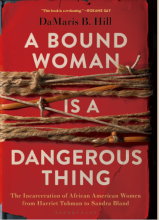
A revelatory work in the tradition of Claudia Rankine's Citizen, DaMaris Hill's searing and powerful narrative-in-verse bears witness to American women of color burdened by incarceration.
"It is costly to stay free and appear / sane."
From Harriet Tubman to Assata Shakur, Ida B. Wells to Sandra Bland and Black Lives Matter, black women freedom fighters have braved violence, scorn, despair, and isolation in order to lodge their protests. In A Bound Woman Is a Dangerous Thing, DaMaris Hill honors their experiences with at times harrowing, at times hopeful responses to her heroes, illustrated with black-and-white photographs throughout.
For black American women, the experience of being bound has taken many forms: from the bondage of slavery to the Reconstruction-era criminalization of women; from the brutal constraints of Jim Crow to our own era's prison industrial complex, where between 1980 and 2014, the number of incarcerated women increased by 700%.* For those women who lived and died resisting the dehumanization of confinement--physical, social, intellectual--the threat of being bound was real, constant, and lethal.
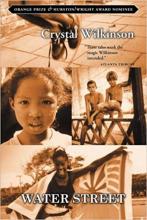
In this critically acclaimed short story collection, Crystal Wilkinson peels back the intricate layers that form the fabric of this community and its inhabitants – revealing emotionally raw, multifaceted tales of race, class, gender, mental illness, and interpersonal relationships. The thirteen succinct stories offer fragmented glimpses of an overarching narrative that emerges, lyrical and fierce. Featuring a new foreword and a new afterword which illuminate Wilkinson’s artistic achievement, this captivating work is poised to delight a new generation of readers.
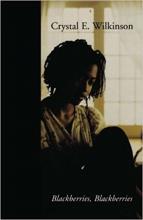
As the title implies, this beautifully written collection bursts with stories reminiscent of blackberries - small, succulent morsels that are inviting and sweet, yet sometimes bitter. Crystal Wilkinson provides an almost voyeuristic glimpse into the lives of her characters: Two misfit teenagers seek stolen moments of love and acceptance in the cloak of night (Hushed); a woman spends every waking hour obsessed with dying yet ironically watching her loved ones pass away before her (Waiting on the Reaper); a wife confronts her husband’s mistress in a diner over potato skins and cornbread (Need); and a pious young woman’s torment erupt in a violent and unsuspecting resolution (No Ugly Ways).
The stories in this award-winning collection are terse and transient, like snippets taken from random dreams, thoughts, or conversations. Wilkinson is able to embed a vibrancy into each stunningly descriptive and evocative tale. Infused with humor, sadness and honesty, this provocative and haunting work features a new foreword and a new afterword by nationally acclaimed authors Nikky Finney and Honoree Jeffers.
By Jenny Wells and Alicia Gregory
Sustainability and coal mining don't typically go hand in hand, but a project at the University of Kentucky is offering an opportunity to bring the two together.
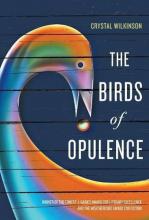
In this novel four generations of women confront life and love in small-town Opulence, Kentucky weaving their family's portion of a southern black American community's fabric.
In Literate Zeal, Janet Carey Eldred examines the rise of women magazine editors during the mid-twentieth century and reveals their unheralded role in creating a literary aesthetic for the American public. Between the sheets of popular magazines, editors offered belles-lettres to the masses and, in particular, middle-class women. Magazines became a place to find culture, humor, and intellectual affirmation alongside haute couture.
Eldred mines a variety of literary archives, notably the correspondence of Katharine Sargeant White of the New Yorker, to provide an insider's view of the publisher-editor-author dynamic. She chronicles the work at the major women's magazines of the day: Ladies' Home Journal, Mademoiselle, Vogue, and others enacted an editorial style similar to that of the New Yorker by offering literature, values, and culture to an educated and aspiring middle class. These publications created and sustained a mass literacy never before seen in American publishing.
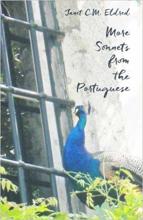
More Sonnets from the Portuguese is a sonnet novella that chronicles one year in the life of Zélia Nunes, a widow in her mid-40s. When Zélia receives an email from an ex-lover, her powerful inner longings threaten long-held traditions of Azorean-American and Azorean life. Capturing the essence of a very visible culture, Silicon Valley, and a mostly invisible one, the San Joaquin Valley, More Sonnets from the Portuguese is familiar and exotic.
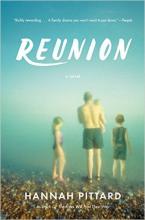
Five minutes before her flight is set to take off, Kate Pulaski, failed screenwriter and newly failed wife with scarcely a hundred dollars to her name, learns that her estranged father has killed himself. More shocked than saddened by the news, she gives in to her siblings' request that she join them, along with her many half-siblings and most of her father's five former wives, in Atlanta, their birthplace, for a final farewell.
Written with huge heart and bracing wit, REUNION takes place over the following four days, as family secrets are revealed, personal foibles are exposed, and Kate-an inveterate liar looking for a way to come clean-slowly begins to acknowledge the overwhelming similarities between herself and the man she never thought she'd claim as an influence, much less a father.
Hannah Pittard's "engaging and vigorous" prose masterfully illuminates the problems that can divide modern families--and the ties that prove impossible to break. (Chicago Tribune)