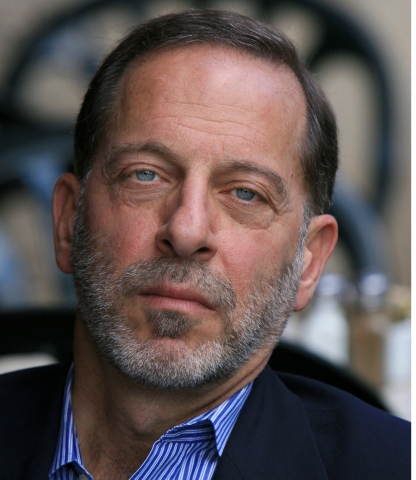
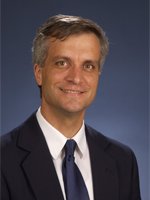
This lecture will examine the historical foundations of U.S. relations with and approaches to Iraq that influence the dynamics of the current events and crises in that country and its region.
About Peter Hahn:
As a research scholar, Professor Hahn specializes in U.S. foreign relations in the Middle East since 1940. His publications include Missions Accomplished?: The United States and Iraq since World War I (Oxford University Press, 2011); Historical Dictionary of U.S.-Middle East Relations (Rowman and Littlefield, 2007); Crisis and Crossfire: The United States and the Middle East since 1945 (Potomac Books, 2005); Caught in the Middle East: U.S. Policy Toward the Arab-Israeli Conflict, 1945-1961 (University of North Carolina Press, 2004); Empire and Revolution: The United States and the Third World Since 1945 (co-edited with Mary Ann Heiss, Ohio State University Press, 2001); and The United States, Great Britain, and Egypt, 1945-1956: Strategy and Diplomacy in the Early Cold War (University of North Carolina Press, 1991).
Professor Hahn’s research has been supported by the J. William Fulbright Foreign Scholarship Board, the National Endowment for the Humanities, the Truman Library Institute, the John F. Kennedy Library, the Lyndon Johnson Foundation, the Eisenhower World Affairs Institute, the Office of United States Air Force History, and the U.S. Army Center of Military History. He has lectured across the United States and in Canada, Britain, France, Switzerland, Norway, Germany, Austria, Russia, and Israel.
Professor Hahn is committed to undergraduate and graduate instruction. In collaboration with Ohio State colleagues, he has advised or co-advised more than two dozen doctoral dissertations in U.S. foreign relations history and has helped to launch new undergraduate study abroad programs on World War II and its impact on the modern world.
Since 2002, Professor Hahn has served as Executive Director of the Society for Historians of American Foreign Relations, a professional society of some 1,600 members in four dozen countries. In 2010, Governor Ted Strickland appointed Professor Hahn to a five-year term on the State of Ohio’s War of 1812 Bicentennial Commission. Professor Hahn served as associate editor of Diplomatic History in 1991-2002.