INFINITE SAND GATORS


This unusual bedform was created by the self-organizing dynamics of ocean waves, wind, sand, and shells a couple of days ago.

OK, it wasn’t. It is the work of a vacationer at Myrtle Beach. But it got me to thinking, not only about what an awesome sand sculpture it is, but about uniqueness and probabilities in Earth surface systems.

In theoretical physics, the “many worlds in one” (MWO) concept holds that, with unlimited space and time, any outcome not forbidden by the first and second laws of thermodynamics (laws of conservation of mass and energy) will eventually occur (Vilenkin, 2007 is the standard source for MWO; I encountered it via Koonin, 2012). Thus, on some beach, somewhere, some time, waves and wind have independently sculpted a sand alligator.

Regeneration Bonus: Jeramiah Smith


When we talked to the four biologists that make up the unofficial regeneration "cluster" at the University of Kentucky, we learned too many interesting things to cram in the group video. So we made a short video for each of them. Here's more on Jeramiah Smith, salamanders and sea lampreys.

Produced by Research Communications at the University of Kentucky.

Read the full story here: uknow.uky.edu/content/regeneration-bonus-jeramiah-smith


FLUVIAL BEACHES


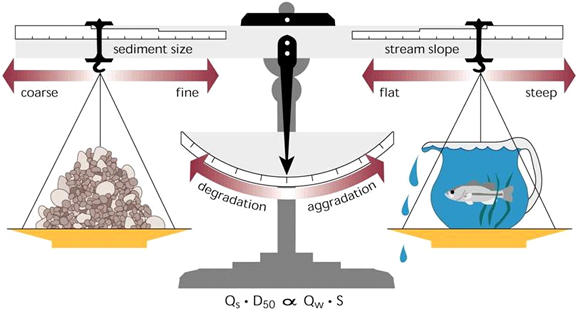
A sandy beach is actually sometimes a pretty good place to think about fluvial forms and processes. The small streams, swashes, outfalls, and ebb-tide channels can be examined up-close, and they change several times each day, with the tidal cycle (here where I am at the moment in South Carolina, two high and two low tides each day). Thus Buck Swamp Creek, which discharges on the beach near where I’m staying, goes through four cycles of change a day.

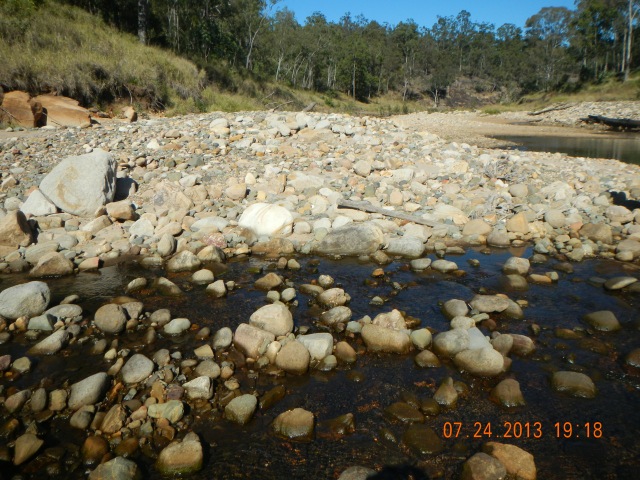
A lot of work in recent years suggests that unless the material is pretty cohesive (which of course beach sand is not), without vegetation stream channels tend to be braided, and single-channel meandering forms are rare. You can see that here, where the marsh creeks—with plants and mud—are meandering, but develop nice braided patterns where they cross the sand. But along a mud coast near Cairns, Australia, where I spent some time last (N. hemisphere) summer, the same kinds of channels across the tide flats were meandering.

Braided channel crossing the beach at low tide, Myrtle Beach, SC. 

Subscribe to