Oser's Research Focuses on Helping Former Prisoners Avoid Opioids
By Gail Hairston
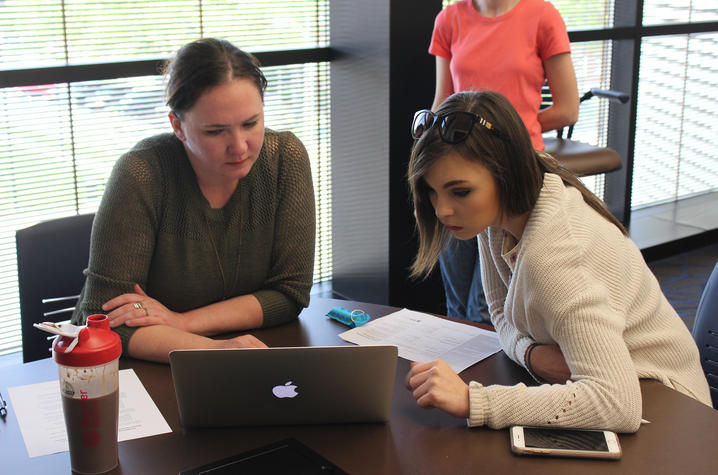
In recent years, much federal funding has been earmarked to help find solutions to the opioid use and overdose crisis in the nation’s rural regions. The effort has included a focus on coal-impacted Appalachian states, including Kentucky.
Naff Symposium

Schedule of Events - March 31, 2017 |
|
|---|---|
| 8:00 a.m. |
Registration & Continental Breakfast Gallery, W.T. Young Library |
| 8:50 a.m. | Welcome |
| 9:00 a.m. |
John A. Rogers, PhD Materials for Biodegradable Electronics Auditorium, W.T. Young Library |
| 10:00 a.m. | Break (refreshments available) |
| 10:30 a.m. |
Zhenan Bao, PhD Skin-Inspired Organic Electronic Materials and Devices Auditorium, W.T. Young Library |
| 11:30 a.m. | Lunch & Break |
| 1:00 p.m. |
George Malliaras, PhD Interfacing with the Brain using Organic Electronics Auditorium, W.T. Young Library |
| 2:00 - 2:30 p.m. | Coffee Break & Poster Session Set-up |
| 2:30 - 3:15 p.m. |
Alon Gorodetsky PhD, Naff Young Investigator |
| 3:15 - 4:30 p.m. |
Poster Session Jacobs Science Building |
For additional information, click here.
Protein-carbohydrate recognition phenomena illustrated through simulation and thermodynamic calculations
Christina M. Payne, Department of Chemical and Materials Engineering, University of Kentucky, Lexington, KY
Carbohydrates are the most abundant biological molecules on Earth and play important roles in metabolism, cell wall structure, and cellular-level processes; they also happen to be one of the most structurally diverse natural substrates, constructed from a variety of chemically distinct monosaccharides and glycosidic linkages. In response to this diversity, carbohydrate-binding proteins have evolved many different structural approaches to enable recognition of complex carbohydrate substrates. Molecular simulation and free energy calculations, coupled with structural and biochemical observations, can provide extraordinary resolution of molecular-level protein-carbohydrate recognition mechanisms. In this talk, I describe two recent studies wherein we used molecular modeling to reveal the underpinnings of experimentally-observed protein-carbohydrate recognition phenomena. In the first example, we will examine the recognition mechanisms of b-sandwich carbohydrate binding modules (CBMs), a non-catalytic domain of carbohydrate-active enzymes. Counterintuitively, our results suggest these CBMs accommodate cello-oligomers in a bi-directional fashion, and the approximate structural symmetry of the substrate enables such promiscuity. In the second example, we will look at the substrate recognition mechanisms of a mammalian glycoprotein and biomarker, YKL-40, associated with chronic inflammatory diseases and a multitude of cancers. Identification of the lectin’s physiological ligand and biological function has proven experimentally difficult. Using a multifaceted computational approach, we evaluated the feasibility of binding several different polysaccharide and collagen peptide ligands; hyaluronan was revealed as the likely physiological ligand, consistent with associated in vivo expression levels. In general, our approaches reveal valuable fundamental insights into the complex solid and soluble carbohydrate substrate recognition mechanisms of biomolecules, the findings of which hold considerable promise in advancing lignocellulosic biotechnology, glycome mapping tools, and pharmaceutical antagonist design.

Size-Dependent Oxidation and Deposition of Metal and Alloy Nanoparticles


South Korean Graduate Begins Life After UK
By Tiwaladeoluwa Adekunle
Jeesun Lim is one alumna who thoroughly enjoyed her undergraduate years as an economics major at the University of Kentucky. Holding leadership positions on campus as the secretary and vice president of the Korean Student Association as well as the treasurer of the International Student Council, she found a sense of community and made lasting friendships and connections.
UK to Host STEM Conference for Middle School Girls on April 29th
A team from the University of Kentucky has received a grant from Kentucky NSF EPSCoR (National Science Foundation Experimental Program to Stimulate Competitive Research) for Education and Outreach Activities to fund a STEM (science, technology, engineering and mathematics) conference for middle school girls at UK this spring.
Anne-Frances Miller Chosen as Next President Elect of the Division of Biological Chemistry in the American Chemical Society
Professor Anne-Frances Miller was chosen as the next President Elect of the Division of Biologial Chemistry in the American Chemical Society (ACS). This 7000-member technical division of the ACS hosts section meetings, administers awards, supports regional meetings and encourages participation of biochemists in the ACS. Prof. Miller’s two-year term begins on January 1, 2017.